Beyond the Individual Brain in Education
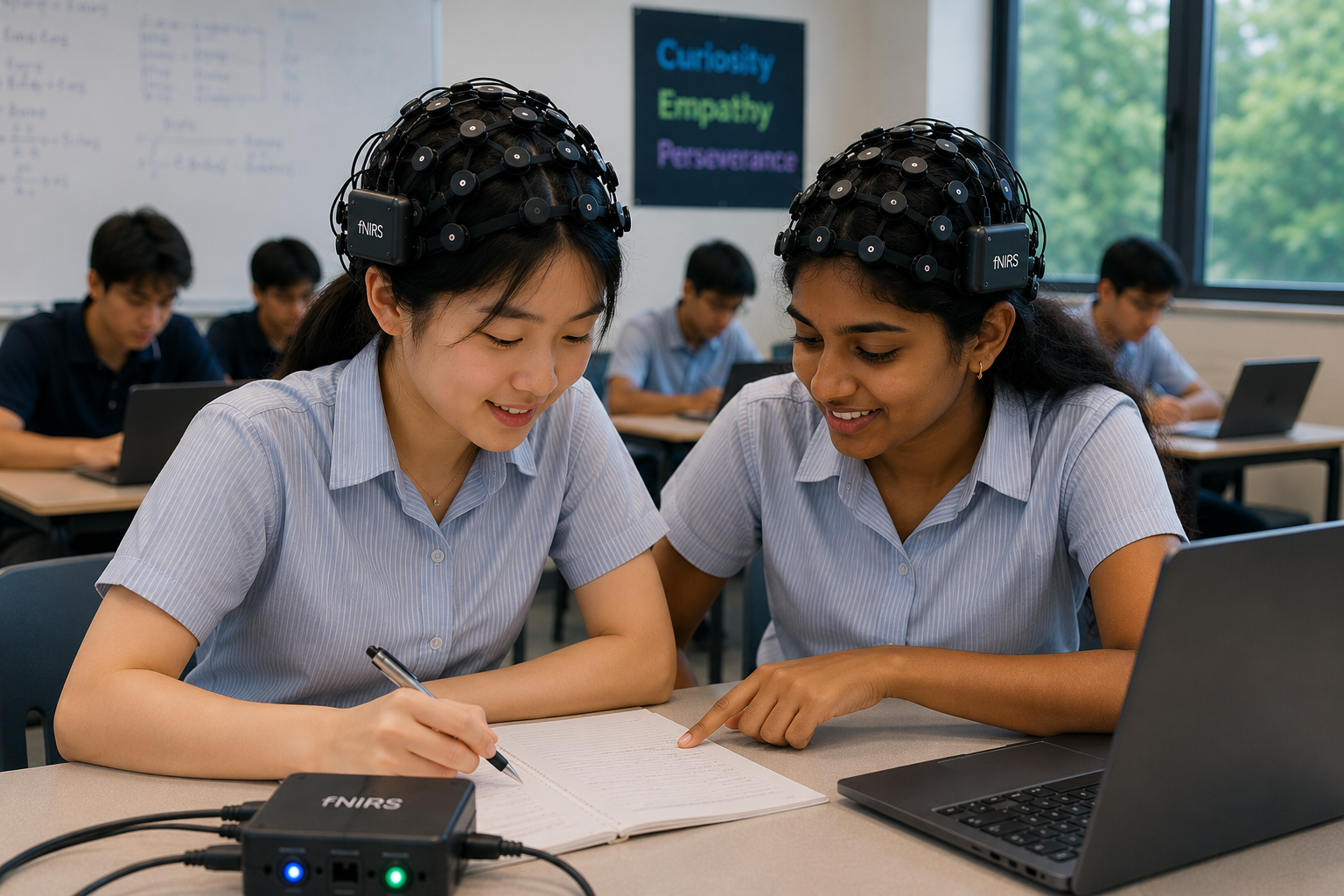
Why talk about brain synchrony in education?
For a long time, education has been designed around the individual learner. We ask what each student knows, how each student performs, and how each student progresses.
But classrooms do not work like isolated learning chambers. Students learn with and through other people. They learn by listening, responding, watching, explaining, questioning, disagreeing, and building ideas together.
This means learning has a strong social dimension.
Learning is shaped by:
shared attention
relationships
turn-taking
discussion
peer collaboration
teacher responsiveness
classroom climate
coordinated action
Interpersonal neural synchrony gives researchers a way to study this social dimension more directly.
What is interpersonal neural synchrony?
Interpersonal neural synchrony refers to the alignment of brain activity between people during interaction.
When people are engaged in the same activity, attending to the same thing, or interacting meaningfully, their brain activity can become more aligned over time.
This does not mean students are thinking exactly the same thoughts. Instead, synchrony may reflect that people are sharing attention, coordinating understanding, and responding to one another in real time.
What does the evidence suggest?
Across studies, inter-brain synchrony has been linked to several important aspects of learning.
Synchrony and engagement
Classroom studies suggest that students’ brain activity becomes more synchronised when they are more engaged. Synchrony is also stronger when students share attention and interact with others.
This matters because engagement is often treated as something individual, but synchrony research suggests that engagement can also be collective. A class can become more or less aligned as a group.
Synchrony and group performance
In group learning, synchrony appears to capture something about how well students coordinate their thinking. Some studies show that groups with stronger synchrony perform better on collaborative tasks.
This suggests that effective group work is not just about putting students together. Good collaboration requires students to listen, respond, build on ideas, and work toward a shared outcome.
Synchrony and teacher–student learning
Research also suggests that synchrony between teachers and students can predict learning outcomes. Students may learn better when they are aligned with the teacher’s explanation, timing, and attention.
This reframes teaching. Teachers are not only delivering content. They are also organising shared attention, pacing interaction, and helping students stay connected to the learning process.
Synchrony and causal evidence
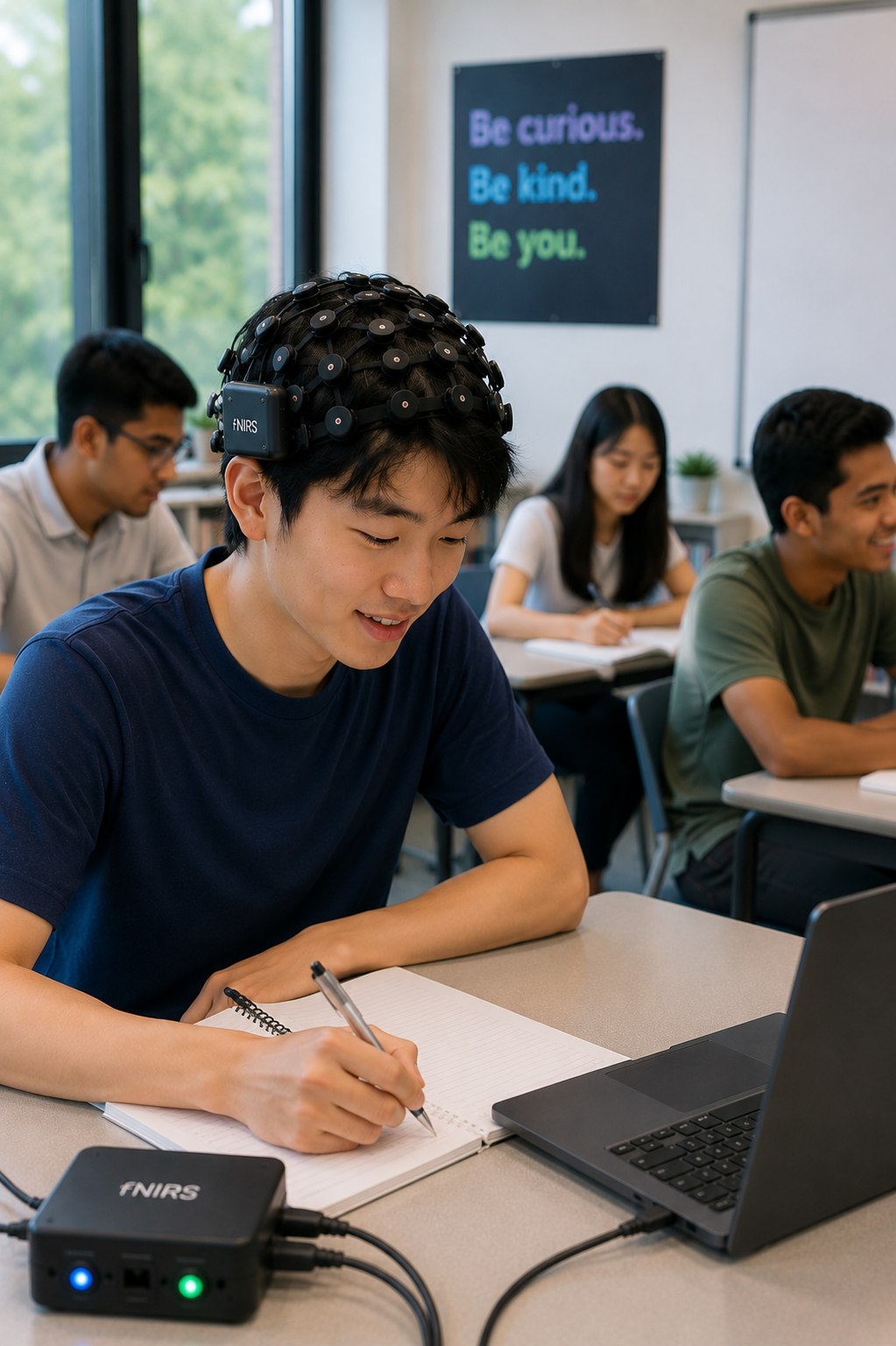
Most studies show associations: higher synchrony is linked with better learning. But researchers are also beginning to ask whether synchrony can play a causal role.
Some experimental work suggests that increasing synchrony may improve social interactive learning. This is important because it moves the field beyond simply observing synchrony toward asking whether alignment itself helps support learning.
What meta-analyses tell us
A meta-analysis combines results from multiple studies to see whether a pattern is reliable across contexts.
Meta-analytic findings suggest that inter-brain synchrony is generally positively related to learning outcomes. Importantly, the relationship is stronger under certain conditions, especially when interaction is:
face-to-face
reciprocal
coordinated
high in turn-taking
This means synchrony is not automatic. It depends on how interaction is designed.
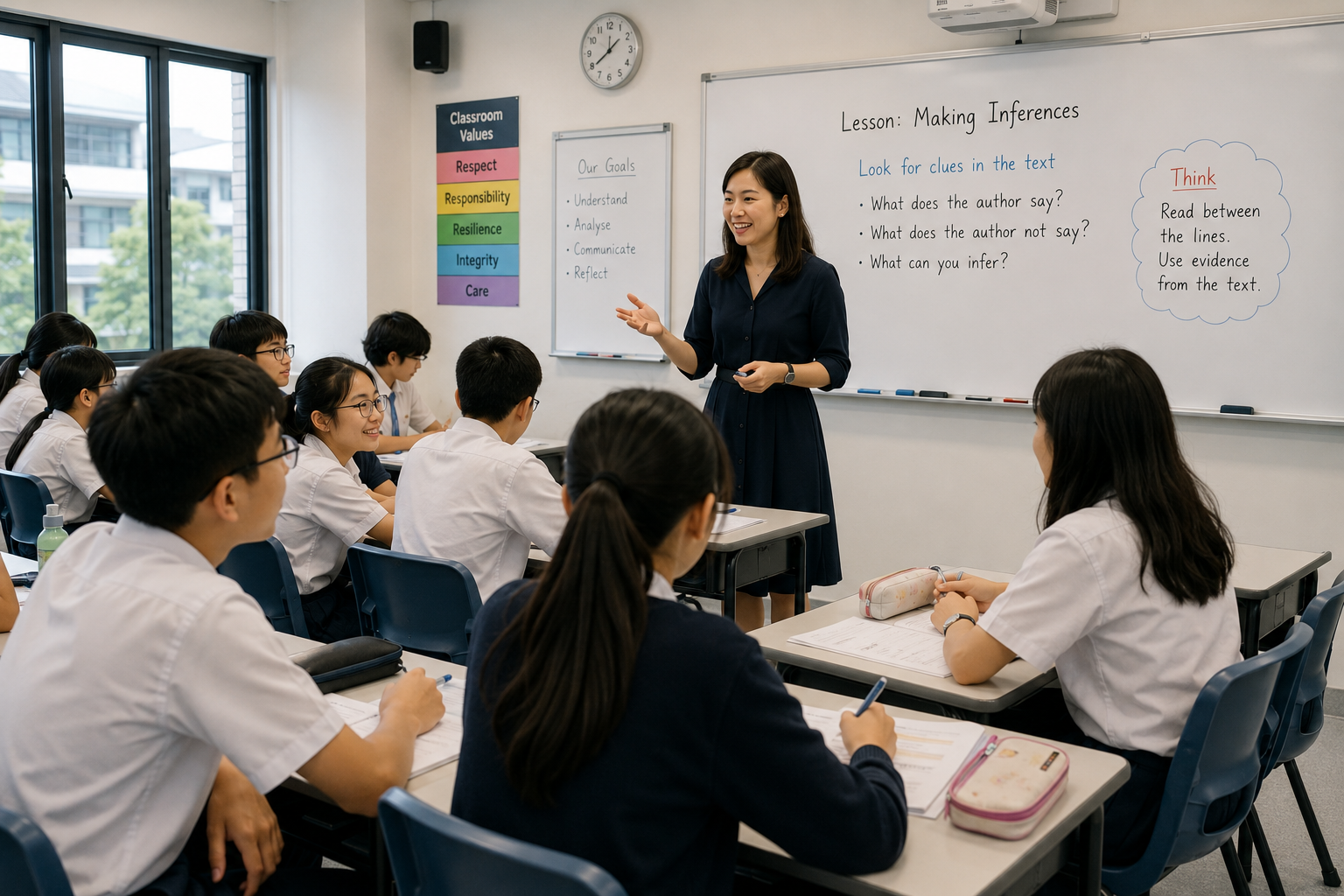
Principle 1: Create conditions for shared attention
Are learners socially present and jointly attending?
Students are more likely to align when they are socially present to one another and able to access interpersonal cues such as:
gaze
facial expression
body language
teacher responsiveness
peer visibility
rapport and relational closeness
Face-to-face learning is not valuable simply because students are in the same room. It becomes valuable when students can see, hear, notice, and respond to one another.
Principle 2: Design interaction mode
Is interaction reciprocal, coordinated, and interdependent?
This principle is about how interaction unfolds.
Brain synchrony is especially linked to learning when interaction requires learners to respond to one another in real time. This includes:
turn-taking
reciprocal interaction
joint presentations
brainstorming
problem-solving
coordinated movement
interdependent dialogue
The goal is not simply “more interaction.” The goal is better-designed interaction.