What is Interpersonal Neural Synchrony?

Interpersonal neural synchrony refers to the temporal alignment of brain activity between individuals during social interaction. When people engage with one another—through conversation, shared attention, or collaboration—their neural processes can become coordinated in time. This alignment reflects a dynamic process of mutual adaptation, as individuals continuously respond to and shape each other’s behaviour.
Studying the Social Brain in Interaction.
Traditionally, neuroscience has focused on the individual brain in isolation. More recently, advances in methods such as hyperscanning have enabled researchers to study multiple brains simultaneously.
Using techniques like functional near-infrared spectroscopy (fNIRS) and electroencephalography (EEG), researchers can measure neural activity from interacting individuals in real time. These approaches allow us to examine how cross-brain coupling and temporal alignment emerge during naturalistic interaction.
Rather than capturing static brain responses, this work reveals the dynamic, moment-to-moment coordination that characterises human interaction.
Where Do We See Synchrony?
Interpersonal neural synchrony has been observed across a wide range of relational contexts, including:
Parent–child interactions, where synchrony supports emotional attunement and regulation
Romantic relationships, where it reflects mutual responsiveness and shared affect
Learning environments, where it is associated with engagement and shared understanding
Collaborative settings, where it supports coordination and joint action
Across these contexts, synchrony does not imply identical thinking, but rather aligned and responsive engagement between individuals.
Why does it matter?
Research shows that interpersonal synchrony is associated with:
effective communication
improved learning and engagement
stronger social connection
enhanced coordination in groups
These findings suggest that connection is not only psychological or behavioural, but also biologically instantiated. Synchrony provides a mechanism through which individuals come to understand, adapt to, and work with one another.
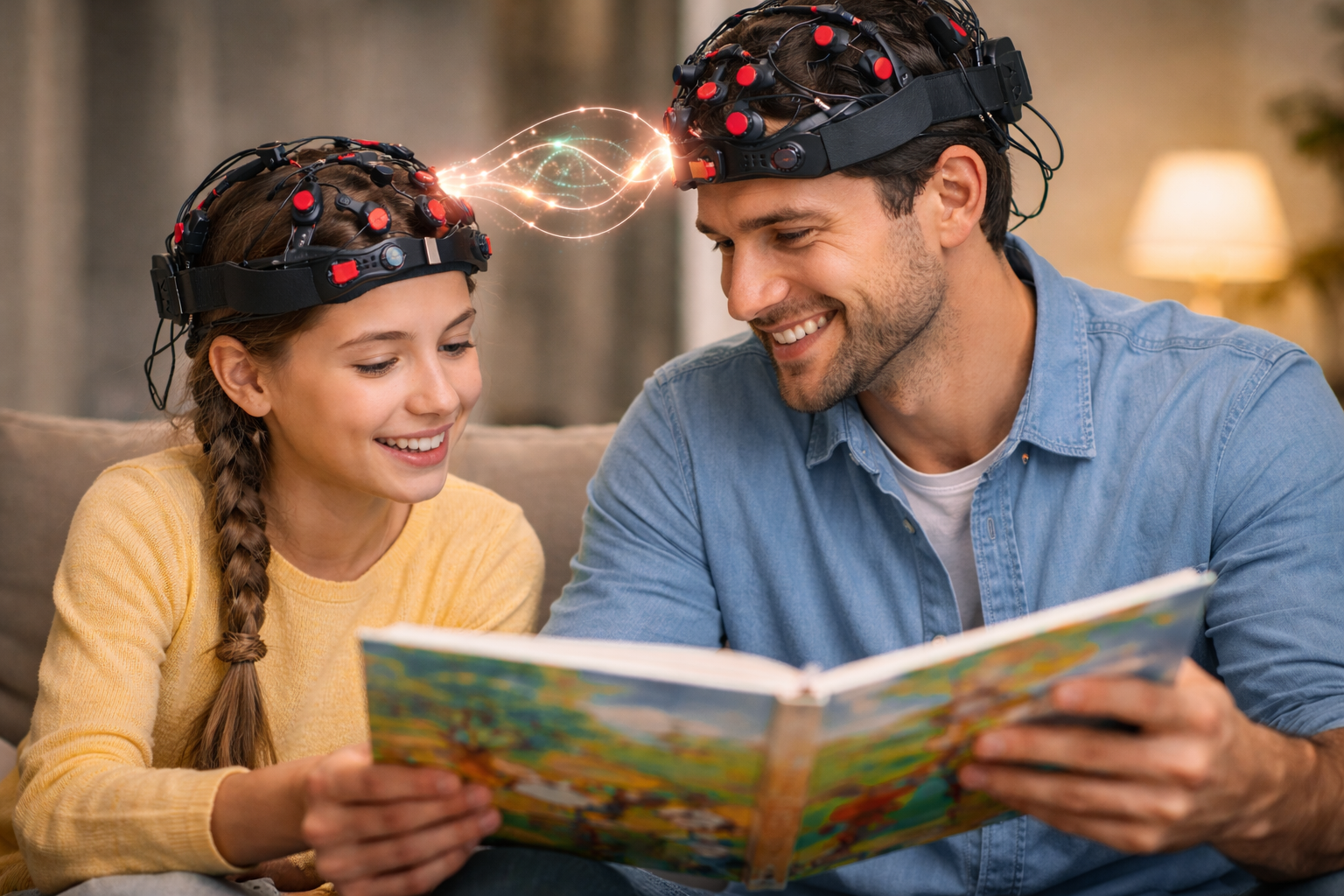
Interpersonal neural synchrony challenges the view of the brain as a self-contained system. Instead, it supports a perspective of the brain as:
Relational — shaped through interaction with others
Dynamic — continuously adapting in real time
Context-sensitive — varying across relationships and environments
From this perspective, social interaction is not peripheral to brain function—it is fundamental to how the brain operates.
From Interaction to Impact.
Understanding synchrony has implications across multiple domains:
Development: how early relationships shape regulation and learning
Education: how engagement emerges through shared attention
Mental health: how relationships support or disrupt regulation
Work and collaboration: how teams coordinate and perform
By linking neural processes to real-world interaction, interpersonal neural synchrony provides a bridge between brain, behaviour, and society.

Parent-Child, Spouses and Families
A relational neuroscience approach to families. Towards understanding families as relational systems.
Appreciating how relationships and social interactions shape the developing brain and early learning.
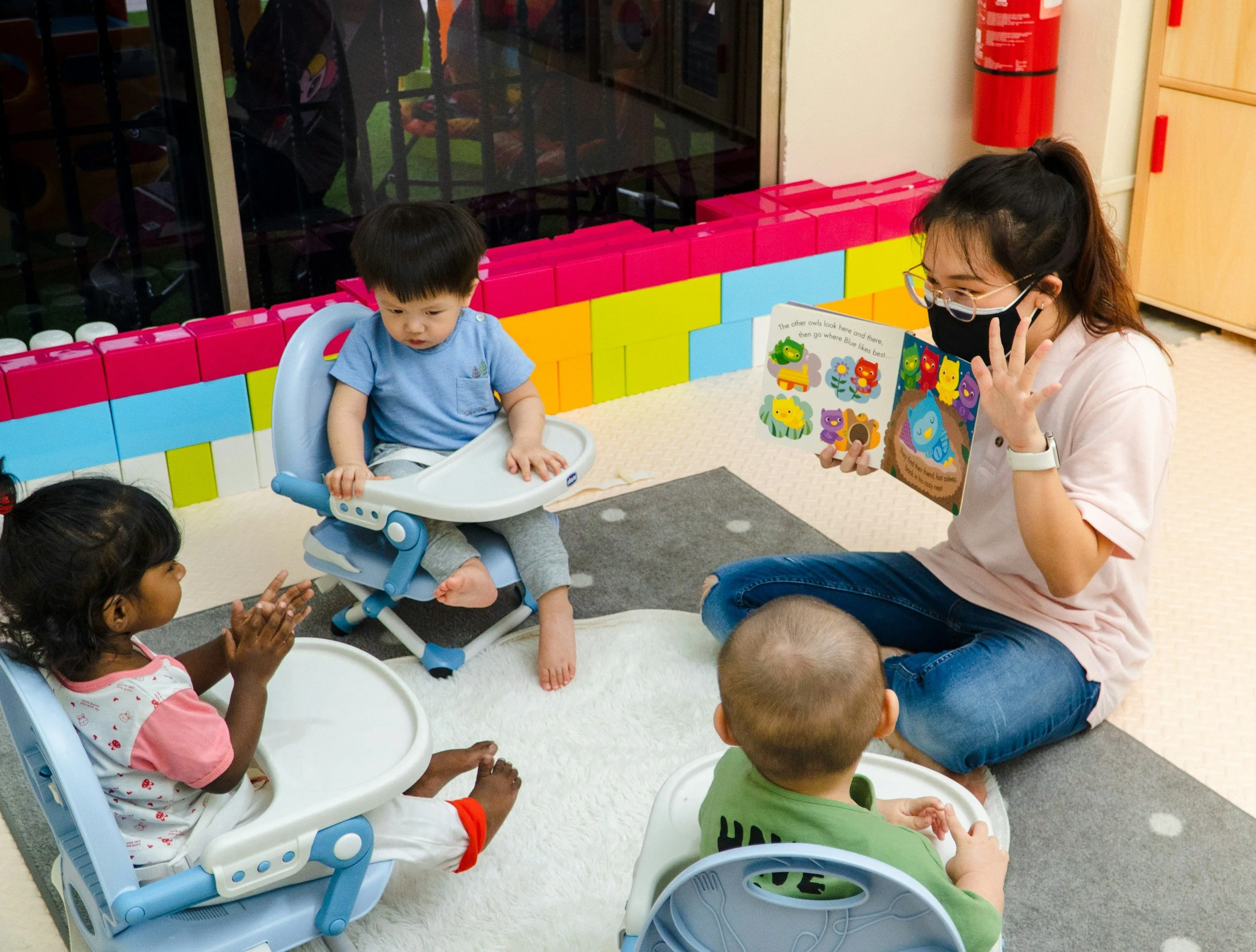
Children & Early Educators
Uncover the relational dimensions that support effective learning and performance.

Learners & the Workplace
Collective well-being starts from understanding how co-regulation from social support is essential.